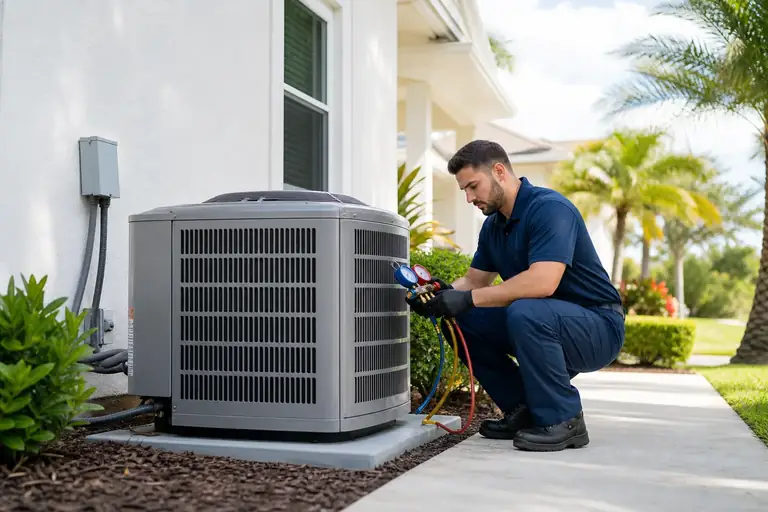
How Energy-Efficient HVAC Systems Affect Orlando Energy Bills
Air conditioning is one of the hardest-working systems in a Central Florida home. Efficient equipment can reduce wasted energy, but the model number alone does not determine your monthly cost. Sizing, installation, ductwork, maintenance, thermostat use, insulation, and weather all influence real-world performance.
What makes an HVAC system energy efficient?
Correct system sizing
An oversized unit may cool quickly but cycle too often, while an undersized system may run continuously. Both can affect comfort, humidity control, energy use, and equipment life. Our AC size calculator offers an initial estimate, but a professional load calculation is more reliable than square footage alone.
Quality installation
Refrigerant charge, airflow, drainage, electrical connections, thermostat setup, and equipment placement all matter. Even high-efficiency equipment may underperform when installation details are missed. Review our approach to HVAC installation and final testing.
Healthy ductwork and airflow
Conditioned air that leaks into an attic never reaches the room it was meant to cool. Restricted returns, damaged ducts, and poor balance can increase run time. A ductwork inspection can identify visible leakage and distribution concerns.
Regular maintenance
Filters, coils, drains, electrical components, and airflow should be checked routinely. Preventive HVAC maintenance helps the system operate as designed and can reveal small performance changes early.
Smart thermostat habits
A compatible thermostat can simplify schedules and reduce unnecessary operation. Extreme setbacks may not always save more in a humid climate, so use settings that match your equipment and household. Explore thermostat installation and setup.
Why can energy bills rise even when the AC still works?
Dirty components, low airflow, duct leakage, thermostat problems, declining performance, longer heat waves, rate changes, or changes in household use can all raise costs. Compare energy usage rather than only the dollar total, and avoid assuming that one high bill means the equipment must be replaced.
Replacement may be worth evaluating when the system needs frequent repairs, struggles to maintain comfort, has a major component problem, or uses significantly more energy despite proper maintenance. The right decision depends on condition, repair cost, home needs, and budget.
Energy-efficient HVAC FAQs
Will a new AC automatically lower my bill?
Not automatically. Savings depend on sizing, installation, duct condition, thermostat use, weather, utility rates, and how the old system performed.
Should I close vents in unused rooms?
Closing multiple vents can change system pressure and reduce airflow. A zoning solution or professional balance assessment is safer.
What should I do if my bill suddenly increases?
Check thermostat changes, the filter, unusual run time, open doors or windows, and utility usage. If the cause is unclear, schedule an inspection.
Eficiencia energética
Cómo un sistema HVAC eficiente afecta las facturas en Orlando
El aire acondicionado es uno de los sistemas que más trabaja en un hogar de Central Florida. Un equipo eficiente puede reducir desperdicio, pero el modelo no determina por sí solo el costo mensual. El tamaño, instalación, ductos, mantenimiento, termostato, aislamiento y clima influyen en el rendimiento real.
¿Qué hace eficiente a un sistema HVAC?
Tamaño correcto
Una unidad sobredimensionada puede enfriar rápido y ciclar demasiado; una pequeña puede funcionar continuamente. Ambas situaciones afectan confort, humedad, consumo y vida útil. Nuestra calculadora de tamaño ofrece una estimación inicial, pero no reemplaza un cálculo profesional.
Instalación de calidad
La carga de refrigerante, flujo, drenaje, conexiones, termostato y ubicación importan. Incluso un equipo eficiente puede rendir mal si se omiten detalles. Conozca nuestro proceso de instalación HVAC y pruebas finales.
Ductos y flujo saludables
El aire que se fuga al ático nunca llega a la habitación. Retornos restringidos, ductos dañados y desbalance aumentan el tiempo de operación. Una inspección de ductos puede identificar problemas visibles.
Mantenimiento regular
Filtros, serpentines, drenajes, componentes eléctricos y flujo deben revisarse. El mantenimiento HVAC ayuda al sistema a operar correctamente y detectar cambios temprano.
Uso inteligente del termostato
Un termostato compatible facilita horarios y reduce operación innecesaria. Cambios extremos no siempre ahorran más en clima húmedo. Conozca la instalación y configuración de termostatos.
¿Por qué puede subir la factura si el AC todavía funciona?
Componentes sucios, poco flujo, fugas, problemas del termostato, menor rendimiento, olas de calor, cambios de tarifas o hábitos pueden elevar el costo. Compare el consumo, no solo el total en dólares, y no asuma que una sola factura alta exige reemplazar el equipo.
Vale la pena evaluarlo cuando requiere reparaciones frecuentes, no mantiene el confort, tiene una falla mayor o consume mucho más pese al mantenimiento. La decisión depende de condición, costo, necesidades y presupuesto.
Preguntas frecuentes sobre eficiencia
¿Un AC nuevo bajará automáticamente mi factura?
No automáticamente. Depende del tamaño, instalación, ductos, termostato, clima, tarifas y rendimiento del sistema anterior.
¿Debo cerrar rejillas en habitaciones sin uso?
Cerrar varias puede cambiar la presión y reducir el flujo. Una zonificación o evaluación profesional es más segura.
¿Qué hago si la factura sube de repente?
Revise el termostato, filtro, tiempo de operación, puertas o ventanas y consumo. Si no encuentra la causa, solicite una inspección.